Best Food for a New Kitten: What to Feed First

What is the best food to start a new kitten on when you bring them home?
Start with the exact food they were already eating
The best food to start a new kitten on is the same brand, formula, and texture they were eating before you brought them home. Keeping their diet consistent for the first several days helps prevent upset stomach, diarrhea, and food refusal—common issues when kittens are stressed from a big environment change.
If you don’t know what they were eating, choose a kitten-specific formula
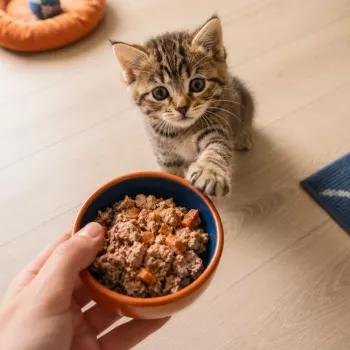
If the previous food is unknown or unavailable, pick a complete and balanced kitten food (look for “for growth” or “for kittens” on the label). A soft option—wet kitten food or dry kibble moistened with warm water—can be easier for young kittens to eat and helps boost hydration. Avoid cow’s milk, which often causes digestive trouble.
Transition slowly if you need to change foods
Once your kitten is settled and eating reliably, transition to any new food gradually over about 7–10 days. Mix a small amount of the new food into the old, increasing the new portion every couple of days. This slow switch helps their digestive system adapt and reduces the odds of loose stools.
Keep the routine simple for the first week
Offer small, frequent meals on a predictable schedule and provide fresh water at all times. Kittens do best with consistent feeding locations and clean bowls. If your kitten won’t eat for 24 hours, is vomiting repeatedly, or has persistent diarrhea, contact a veterinarian promptly.
For a step-by-step schedule, transition ratios, and tips on wet vs. dry feeding, see the full guide here: new kitten feeding guide.
For Best Food for a New Kitten: What to Feed First, the best answer depends on fit, material, care instructions, and how the product will be used day to day.
FAQ
How often should a new kitten eat each day?
Most young kittens do well with 3–4 small meals per day, while very young kittens may need even more frequent feeding. Keep meal times consistent and adjust portions based on age, body condition, and your veterinarian’s advice.











Leave a comment